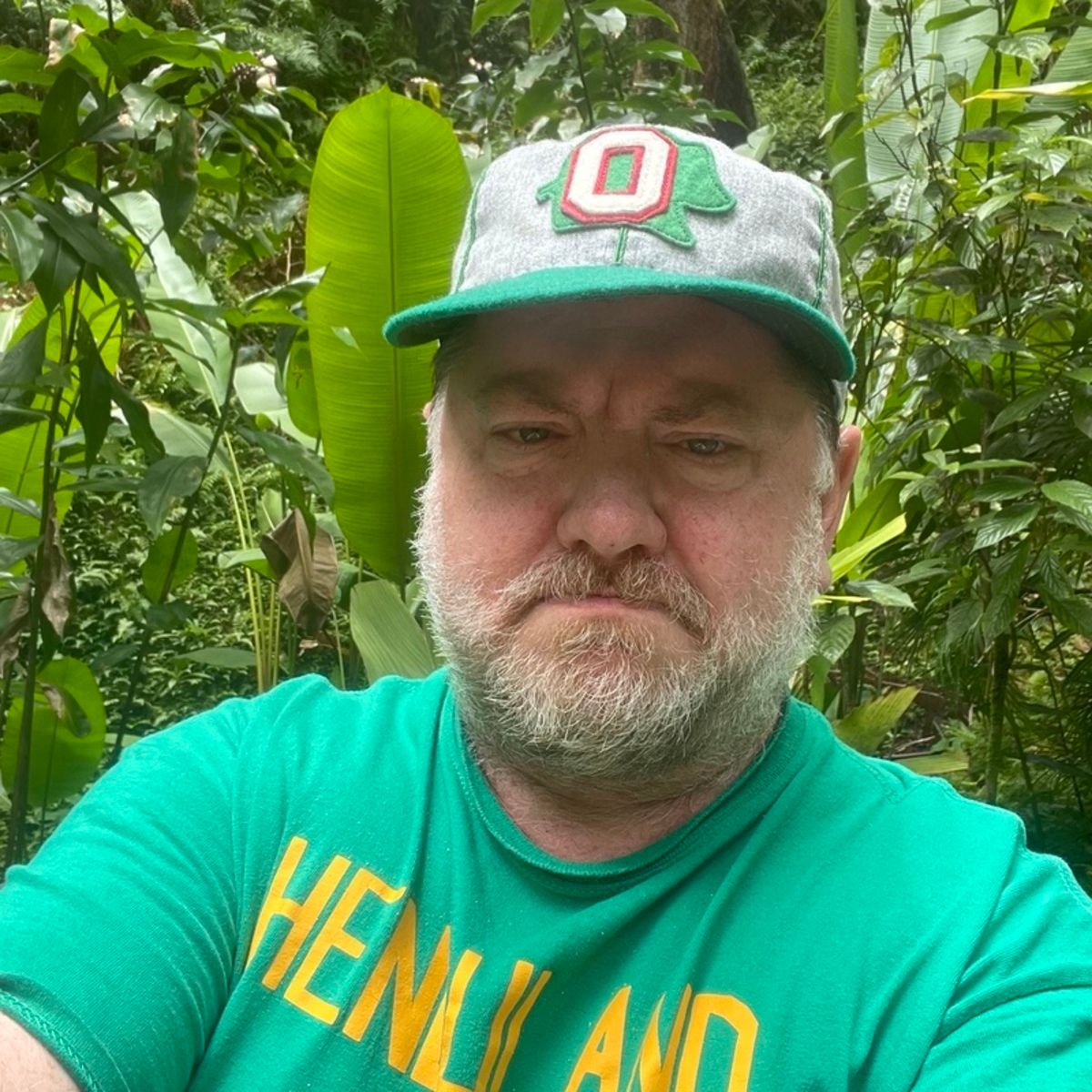

Hello, Welcome, Please Hire Me
Allow me to introduce myself — I'm Philip Michaels, though I suppose if you clicked on a link to get here or subscribed to this newsletter sight unseen, you probably knew that on some level. I recently got laid off from my journalism job, which is hardly unique for a fellow in my line of work, so I decided to set myself apart from the crowd by starting my own newsletter, something no out-of-work reporter has ever considered prior to me.
<Pauses to briefly skim the whole of the internet> Huh. Well, I'll be damned.
Something that does set me apart from a lot of reporters, though, is that being between gigs is a very rare state of play for me. From the time I graduated college, I remained regularly employed for roughly two decades, and then, after experiencing my first layoff in 2014, I managed to find and hold on to the same gig for more than a decade. You won't find many reporter/editor-types who've had just two employers for the entire 21st century, and I like to think that says something about me, even if it's "Wait, you're still here?"
Another thing that's somewhat unique about me is that I got in at the ground floor of smartphone coverage, as I was there at Macworld Expo 2007 when Steve Jobs whipped out the very first iPhone. Now, the iPhone can't claim to be the original smartphone, but it definitely became the one that convinced people to ditch their basic feature phones for something a little more premium. I helped build out Macworld's coverage of smartphones, eventually broadening my expertise into Android devices during my time at Tom's Guide. So get ready for some commentary on all that to crop up here from time to time.
Ultimately, it's my goal to find work again — really, my creditors are insisting that I get a new gig — so it seems like a good idea to keep the writing muscles in good working order. But even if I get snapped up tomorrow by some forward-thinking employer who is doubtlessly attractive and wise beyond all measure, I plan to keep churning out this newsletter, because I'm hoping it will allow me to write about the things I want to write about.
In a way, this is a return to form for me. Back at the dawn of the internet, I had a personal website, where I posted all sorts of writing — some reviews, some personal anecdotes, mostly ill-considered stabs at humor — and it turned out to be a good way to blow off steam during my off-hours. If nothing else, it also provided an avenue to meet the lady who became my wife, so who's to say extemporaneous writing is a waste of time?
So now that we've established the Why for doing this, let's talk about the What — as in, what you can expect if you've decided to let this newsletter land in your inbox on the regular.
Let's start off with the important bit: it's not going to cost you a dime. Maybe at some point down the road if I stick to doing this, I'll add some Patreon-like component for folks who want to throw some money my way, but right now, it's more important to me to keep up the discipline of a regular deadline. No need for any of you to underwrite that.
Plan on getting an email from me once a week. Anything more, and I feel like I'd be intruding on your time.
As to what I'm going to write about, well, that's sort of a moving target at this moment. Maybe it'll be about some article I've read recently. Since I watch a fair amount of movies and read a healthy number of books, I'm likely to subject you to my opinions about those. And thanks to a lack of inner life or productive hobbies, I'm almost certain to bring up sports at some point. Really, think of this newsletter as kind of a dim sum cart careening into your inbox every week — if you don't like what I'm serving up now, just wait a minute or two, and I'll likely start writing about something else.
And if that doesn't sound very promising, let me remind you about the free part.
Your Phil of Politics

Back in 1986, I remember picking up a Harvard Lampoon parody of USA Today. One of the more memorable bits was the recreation of the newspaper's opinion page, populated with anodyne opinons on unremarkable topics touting points of view that largely canceled each other out. The point of the gag: USA Today was not exactly the place to turn to if you wanted to be challenged with hard-hitting opinions.
Whether or not that's still the case, I can't really say — it's been a while since I've stayed in a hotel, which really is the primary way to get exposed to USA Today. But imagine my surprise to come across a USA Today opinion column that doesn't mince words about Elon Musk.
Elon Musk, the world’s richest man and a guy whose social media platform most companies still use, is a BIG fan of White people. I mean … you could say he thinks White people are super. Maybe even “supreme.”
It's almost as if he supports some kind of ... White supreme-acy. Or something like that.
I mean, it's fairly obvious to anyone who's had any bit of exposure to Elon Musk and his pronouncements that the Tesla/SpaceX/Twitter boss is a grotesque racist, but kudos to author Rex Huppke for being willing to put that into print. And rather than just stating the obvious, Huppke's main point for bringing all this up is to wonder why anyone hoping to put their best face forward — mainly a business, but really, any public-facing figure — would want anything to do with the shitshow that Twitter* has become.
* Yes, I realize that Musk has changed the name of the service he ruined to X. But Musk has done a lot of dumb things that I don't feel the need to indulge, and I'm not going to start here.
Companies and people and every entity I can think of should have long ago dropped X like a bad habit, which it was. Promoting your product or your brand on a site owned by a guy who thinks “White solidarity is the only way to survive” is several steps beyond problematic.
<snip>
It’s time to encourage any and all who still use that site to consider who and what they’re tacitly supporting. It’s a White guy who REALLY thinks White people are great. Like … to an increasingly uncomfortable degree
A USA Today columnist reading Twitter and its corporate user base to filth landed on my reading list the same day a Bloomberg news analysis by Amanda Mull took a look at the less-than-courageous positions taken by corporate America during the second Trump administration.
As you may be aware, business leaders have been especially deferential if not downright enthusiastic about Donald Trump since his return to the oval office. "I think he's doing a great job," Salesforce CEO Mark Benioff said last October while urging the president to send troops to occupy San Francisco the way they have, disastrously, in other cities. (In a rare instance of a CEO finally reading the room, Benioff moonwalked away from the part about the troops.) Apple's Tim Cook, who once tweeted that the January 6 insurrection marked "a sad and shameful chapter in our nation’s history" and called on those responsible "to be held to account," has subsequently presented the person responsible with a gold trinket and attended a White House screening of the "Melania" documentary, inconveniently held the same day ICE troops murdered protestor Alex Pretti.
Mull's Bloomberg analysis details the many ways corporations and their executives are at a loss for words as Trump policies unravel, some because they fear reprisals from the president and others because they share his world view. "What corporations’ behavior tells us now couldn’t be clearer," Mull concludes at the end of the article. "They’ve surveyed the risks and decided their advantage still lies with Trump."
In other words, corporations may be people, too, as Mitt Romney once observed. But that doesn't mean that they're people who have your best interests at heart. That's worth remembering the next time the winds shift, and the same people staying silent now resume paying lip service to our shared values and whatnot.
Your Phil of Movies

Via Sony Pictures
I missed Caught Stealing, the Daren Aronofsky crime tale, when it hit the theaters last year, but now that it's available on streaming — Netflix, at time of writing — I gave it a watch. Briefly, Austin Butler plays an ex-baseball prospect who's bottomed out as a bartender in 1998 New York — the timing is very central to the plot — and finds himself the center of some unwanted attention from various ne'er-do-wells when he does a favor for his drug-dealing next-door-neighbor.
There are some tonal problems with the storytelling, which tries to blend a whimsical shaggy-dog-style mystery tone reminiscent of 1970s pictures like The Long Goodbye and The Late Show with a grittier feel. The result is a little bit too jarring to make the story that enjoyable, with one member of the Michaels household tapping out about 40 minutes into the runtime.
Ultimately, Austin Butler stands out as the reason to watch Stealing Home, as he gives a very charismatic performance that makes you root for a rather directionless burnout. If you're a baseball nut like myself, you may be distracted by the tie-in with the 1998 National League wild card race — Butler's character is a San Francisco Giants fan and that team's bid for a playoff berth mirrors some of the violent twists and turns he encounters over the course of the movie. I didn't mind the time I spent watching the movie, but I'm glad I didn't pay full cineplex prices for it. Three stars out of five.
And that's the Phil for this week — thanks for reading. We'll be back soon with more loosely connected bits and bobs.